
How I Directed and Shot Stills for OLIPOP’s “Vintage Game Night” by Chicago based Food & Beverage Photographer Ryan Bringas
OLIPOP “Vintage Game Night” Building a World You Can Feel
There’s something about old video games that just hits differently.
Not the graphics. Not the gameplay.
It’s the feeling, sitting cross-legged on the floor, cords tangled everywhere, snacks spilled, arguing over whose turn it is. It’s loud, imperfect, and completely present.
That was the starting point for OLIPOP’s “Vintage Game Night.”
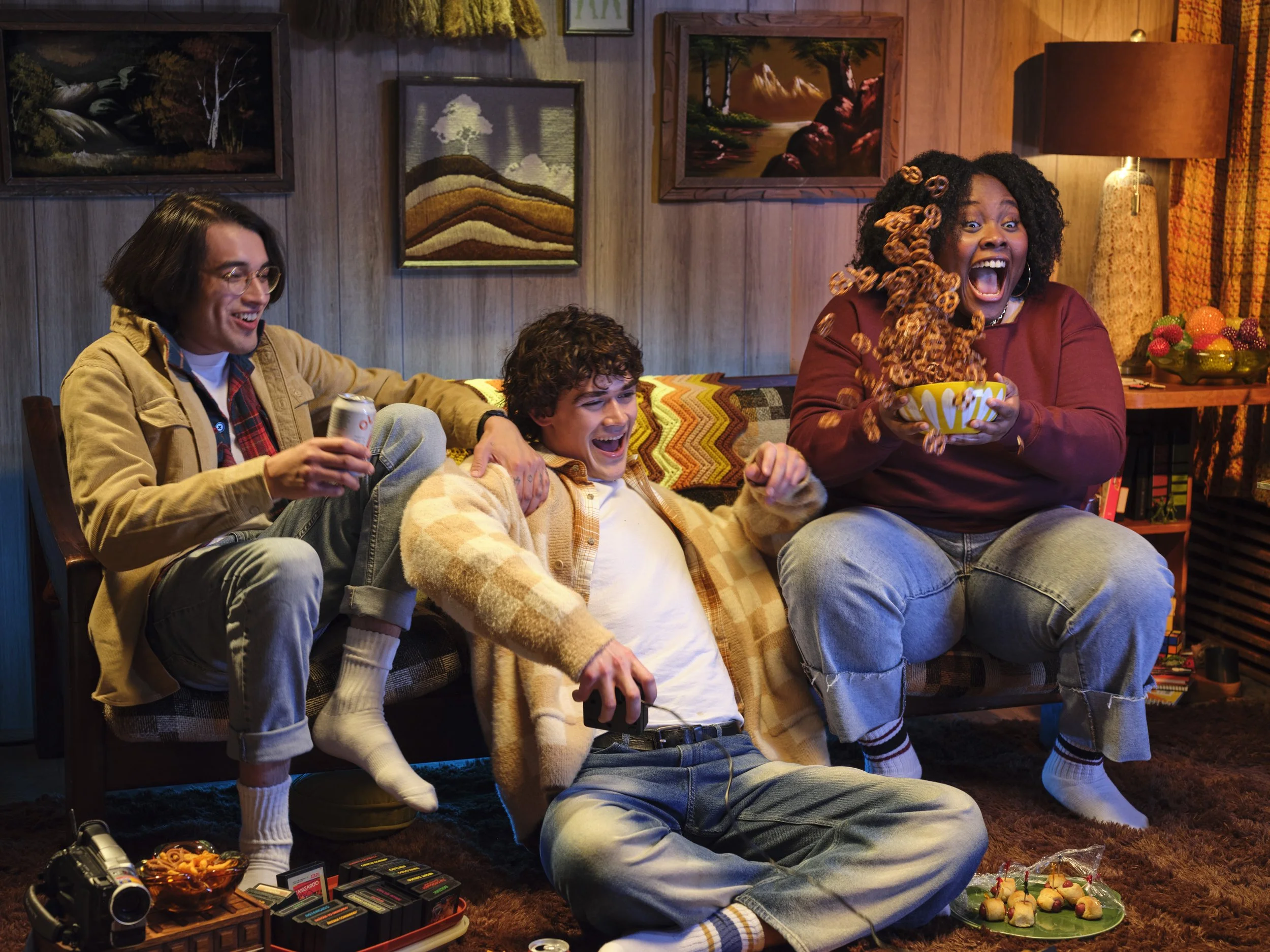
The atmosphere you create on set is directly transferred to the talent you are shooting. Create the right environment and watch the story unfold.
The Idea: Recreating a Feeling, Not Just a Look
From the beginning, I wasn’t interested in making something that simply looked retro. I wanted to recreate the feeling of being there.
The goal was to build a world that felt lived in, messy, warm and social.
A space where OLIPOP naturally belonged and not as a product placement, but as part of the ritual.
So instead of a clean, stylized “throwback,” we leaned into something more tactile with controllers on the floor, chips spilled everywhere and friends yelling at the screen. You remember right? The kind of night that you didn’t document because you were too busy living.
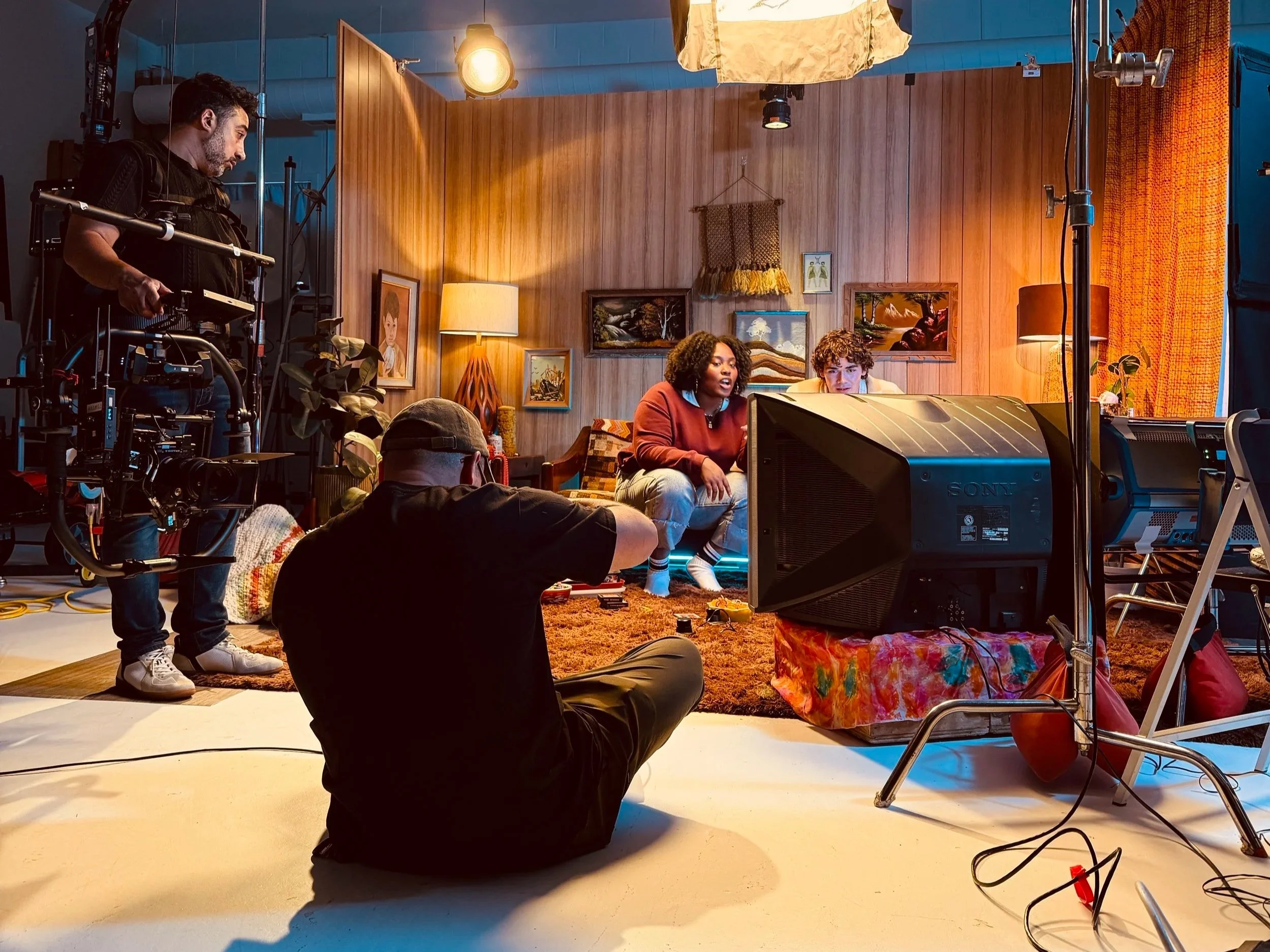
What can you do with 4 walls, a rug and a $100 sofa from Facebook marketplace? Turns out, a whole lot.
Building the world
A big part of this project was creating an environment that felt authentic down to the smallest detail.
We pulled from:
Atari-era gaming systems
80s/90s living rooms and dens
Analog objects, cartridges, cords, landlines, camcorders
Nothing was accidental. Every object had a job: to trigger memory.
Working with prop stylist Sena Rosenberg, we layered the set intentionally with shag carpet, worn-in furniture, scattered snacks, and just enough chaos to feel real. The wood panelling on the walls gets me every time!
Because nostalgia isn’t clean. It’s textured.
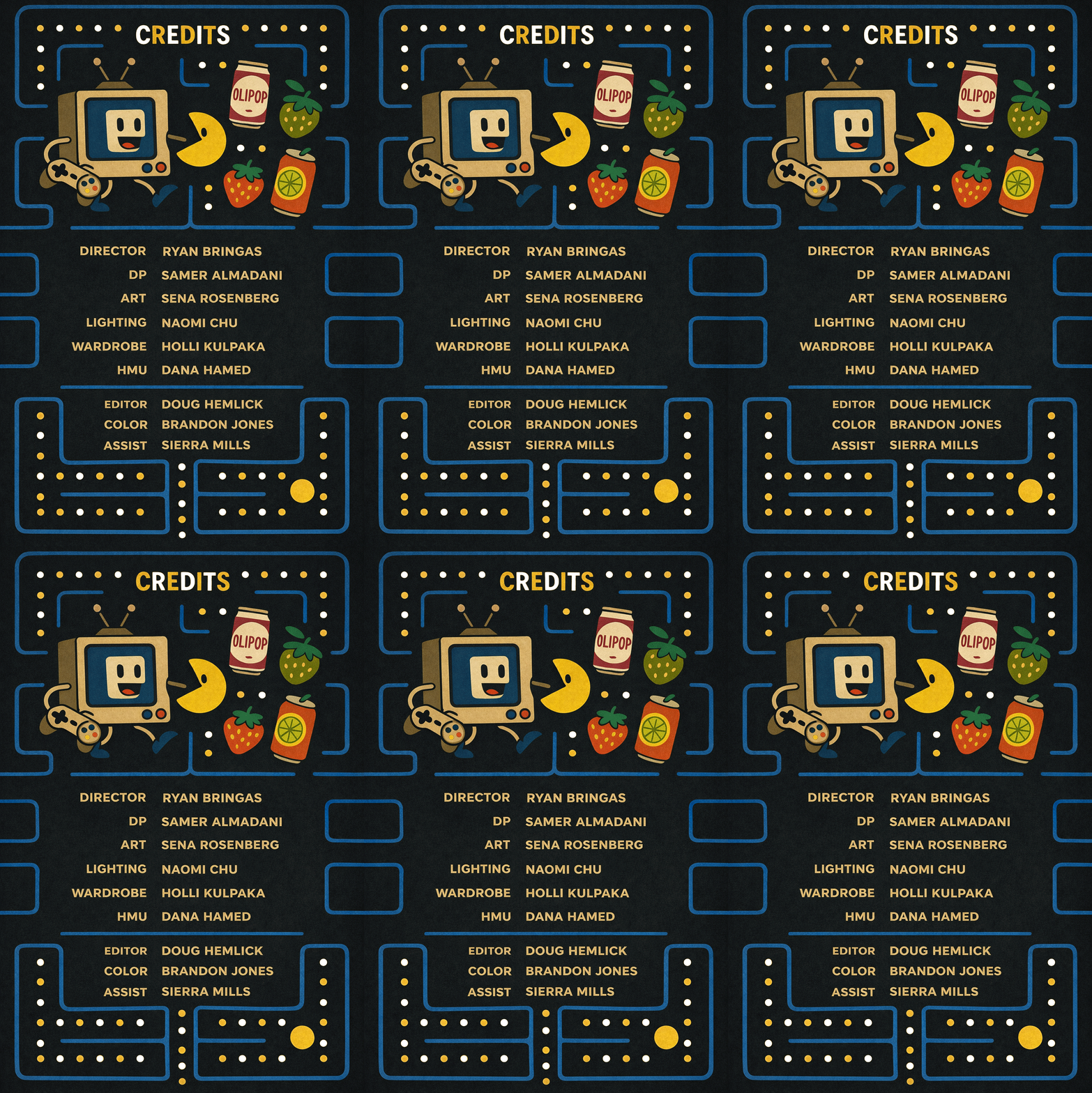
To add more interest to the motion piece, I created short animated title and end cards that look and feel like an arcade game.
Designing the Retro Language
Beyond the physical set, I also wanted the visual system to feel like it came from that era. So I created custom retro graphics inspired by early arcade interfaces with Pixelated title cards, “Press Start” screens, End-credit sequences that mention the crew involved.
These weren’t just design elements, they helped frame the entire piece as if it existed inside a game.
It created a bridge between the real-world environment and the nostalgic fantasy.
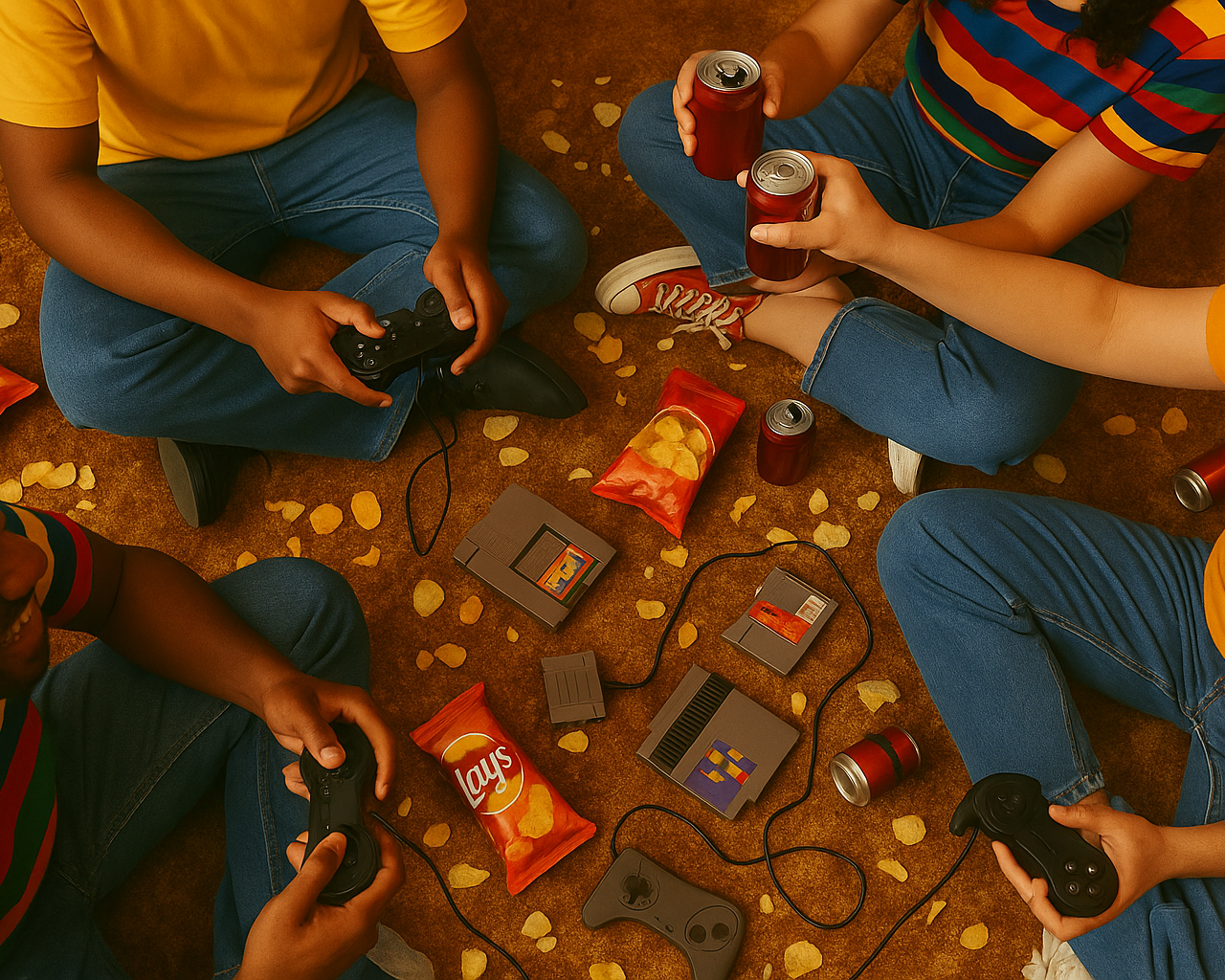
Storyboarding is vital to any motion piece you're directing.
Creating real visual inspiration is important if you’re story telling at a high level. Working with my colleague and friend Samer Almadani, DP for this project, I established a working series of compositions that gave us a strong foundation for the shots. Where a DP really shows their magic is how they use the camera. Coming from a photography background, I have strong singular composition. But when it comes to motion, it’s vital to understand shots as a series of movement. Samer took the storyboard and helped to create actions for the talent, this made it easier to direct and hone in on timing.
(The story board was created using AI)
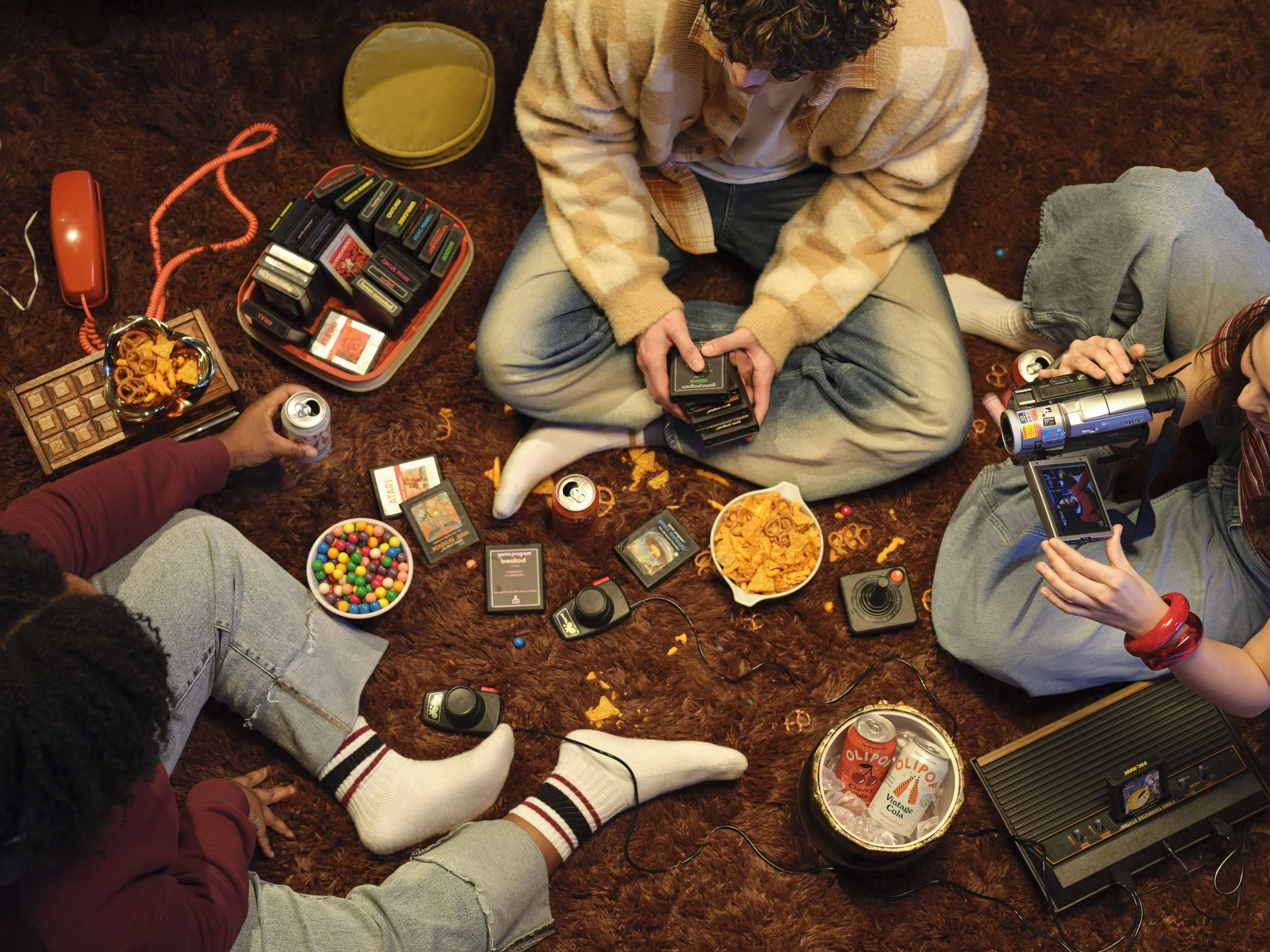
Adding in the human element to a product shot lets the viewer put themselves in the environment.
From Concept to Camera
I led the project from concept through execution, developing the storyboards, directing stills, and collaborating closely with a DP to bring the motion component to life. One of the biggest priorities on set was keeping things loose. We didn’t want overly polished performances, we wanted real reactions with overlapping energy and moments that felt slightly chaotic. The kind of energy that happens when people are actually having fun. The atari console helped create a main focus which was the glowing tv just out of frame. But it was the tactile components, the landline phone and camcorder that brought in another layer of nostalgia and activity for the talent to play with. The camcorder actually worked, so we let the talent press play and capture the scene from their point of view while we captured from ours. This gave us some footage that you see cut into the main video, that feels real and timeless.
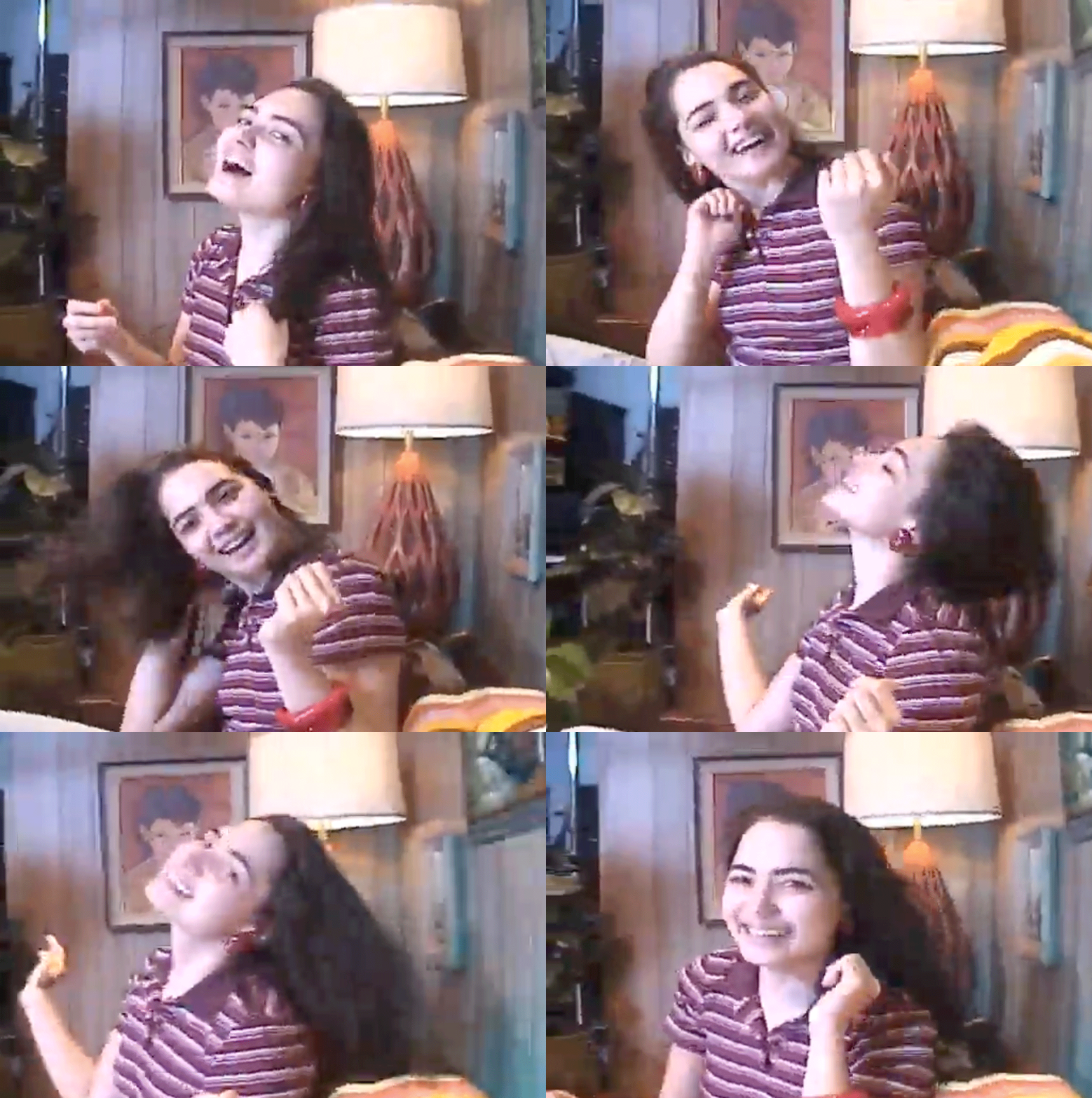
Footage the talent shot of each other during the take and our genius editor Doug Helmick, cut the perfect moment into the final piece.
The Photography: Energy in a Still Frame
The stills were designed to feel as alive as the moment itself. Rather than polished, commercial imagery, the goal was to capture something more observational, like you’ve just dropped into the scene mid-game.
We leaned into warm, tungsten-inspired lighting to create a cozy, slightly chaotic atmosphere. Compositions stayed loose and imperfect: Low, floor-level perspectives, cropped-in moments of hands, controllers, and interactions, wider frames that embrace clutter and group energy
The result is imagery that feels immediate and lived-in and not staged. When the set is dialed in, talent interact with it like it is real which lets the product live and not feel placed.
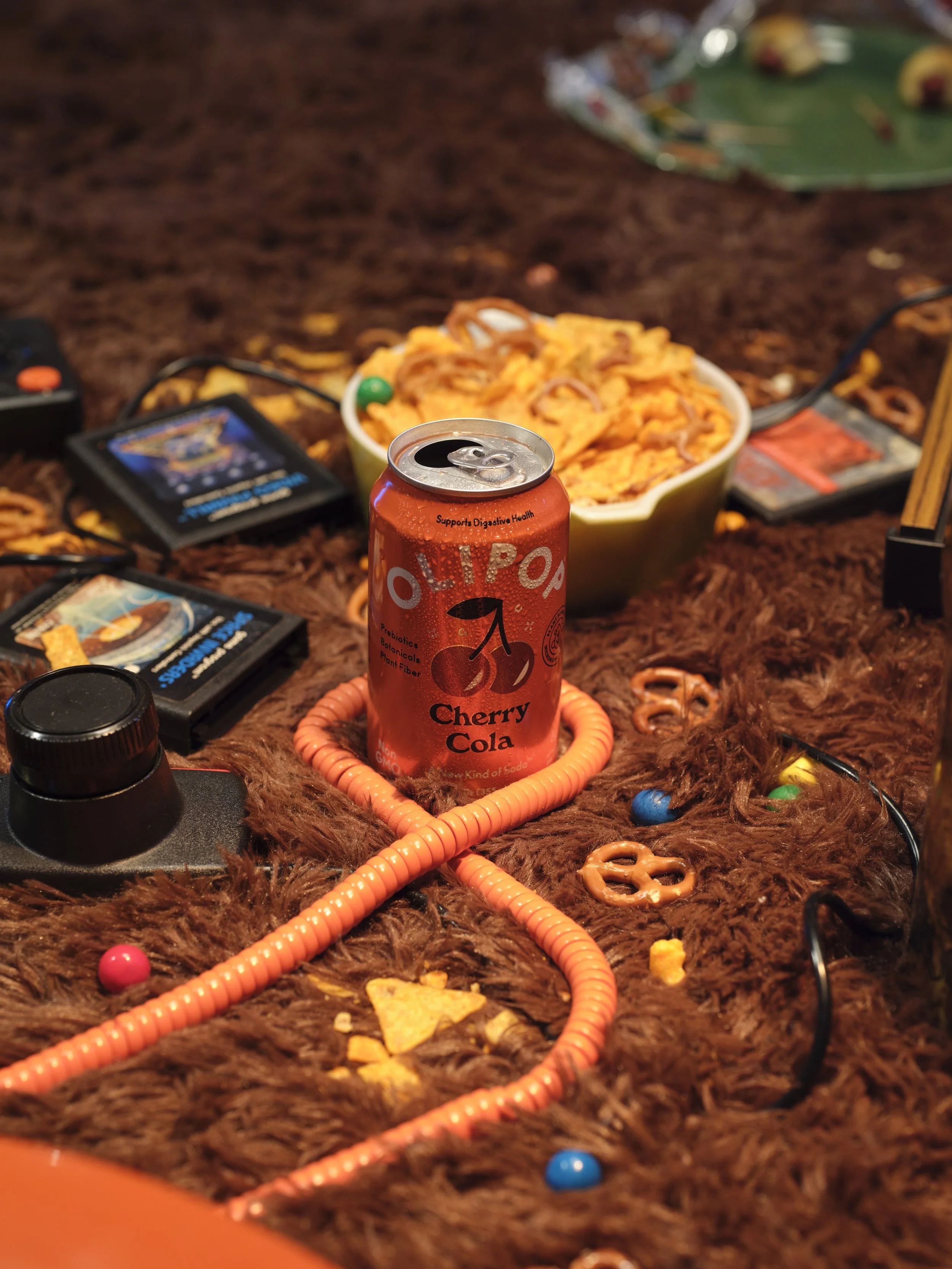
The mess is what makes it feel real. Too much fun was had.
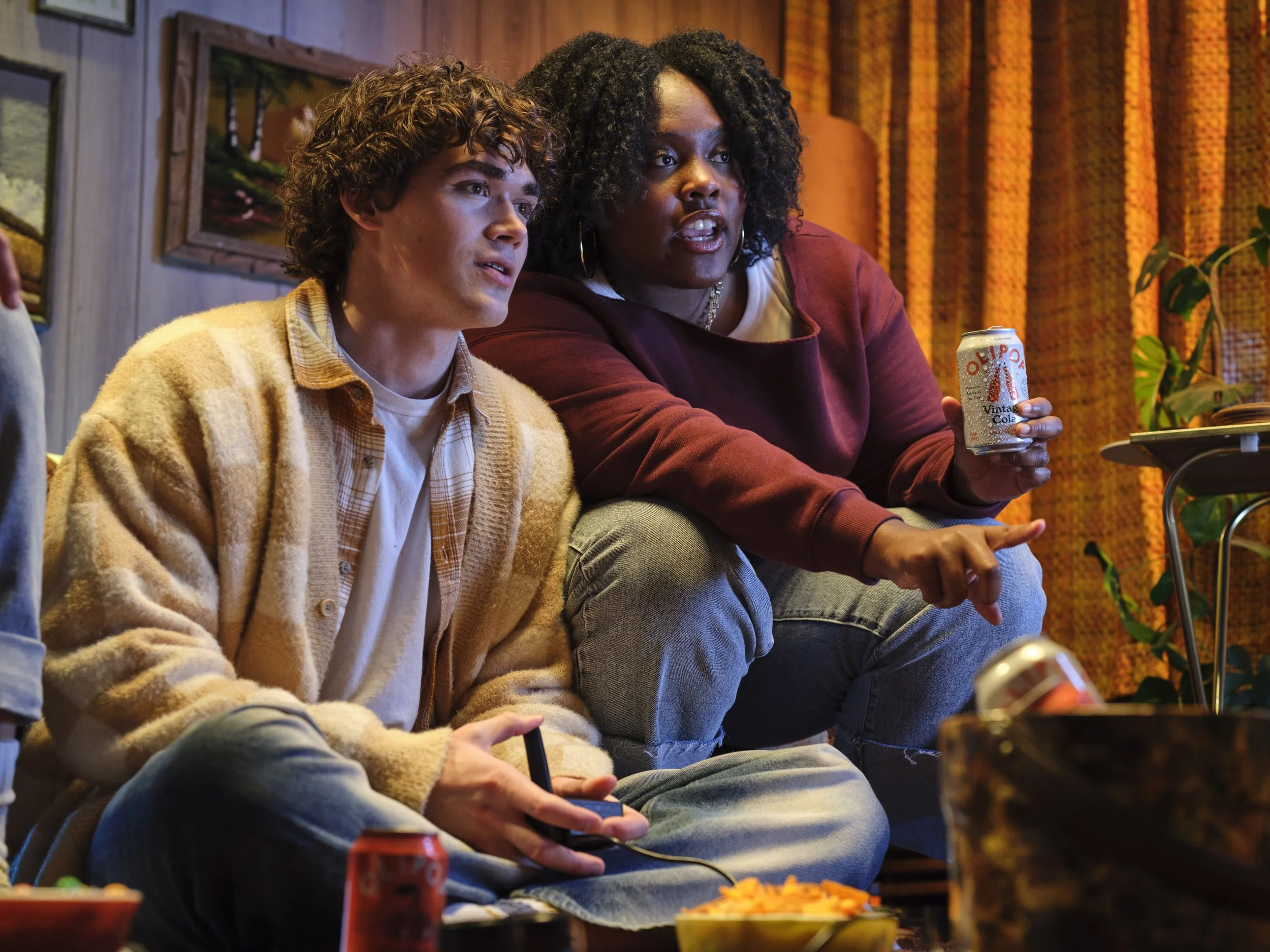
Fully concentrating on the game, the talent forgot we were there.
Product & Detail
OLIPOP was integrated as part of the rhythm of the night, not treated as a hero object. You see it in motion, being grabbed, held, set down and woven naturally into the experience. The set gave us flexibility to move around without relighting every scene. I was able to capture moments where the talent stopped focusing on the camera and instead let themselves be a part of the hang. Capturing reflections in their glasses and concentration faces.
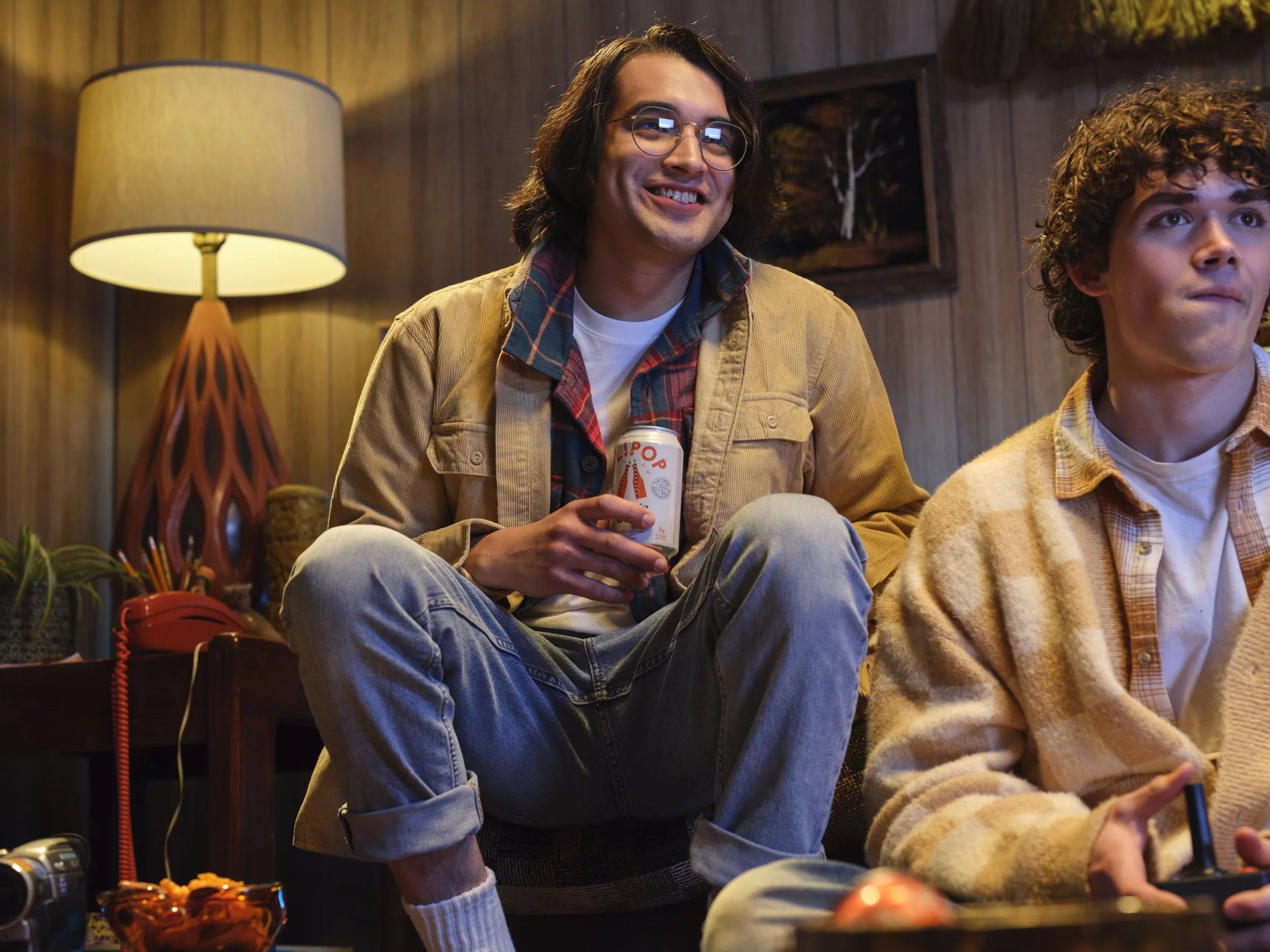
The set was designed to move throughout the space without long resets on lighting. This shot is so perfect with the tv reflection in the talents glasses and the concentration faces playing the video game. The product feels naturally there not placed or forced.
Why It Works
What makes “Vintage Game Night” resonate isn’t just the nostalgia, it’s the specificity. It’s not a generic throwback, it’s a very particular memory.
And that specificity is what allows people to project their own experiences into it. You’ve had that night, you’ve sat on that floor and you’ve played that game.
And now, OLIPOP is part of that memory.
The Takeaway
Shooting stills and motion together is no small feat. For a portfolio piece, it’s so important to have a plan that you can share with your team. And you do need a strong team of people you trust to do their jobs. I was lucky that the crew I assembled are some of the best in the industry. Samer Almadani (DP), Sena Rosenberg (Set design and props), Naomi Chu (Lighting and AC), Holli Kulpacka (Wardrobe), Dana Hamed (HMU), Doug Helmick (Editor), Brandon Jones (Colorist).
When you’re working on a portfolio piece, ensure the team your working with understand your personal vision. Without a strong vision, things can change, your vision can get lost and it becomes something entirely different. All of that to say be flexible with how the day plays out. Not everything follows an exact plan, but the magic is in the moments that happen organically. Happy shooting.

About Ryan
Food photography isn’t just captured, it’s felt. In a world where visuals are everywhere, reliability isn’t about style, it’s about intention, consistency and understanding.
I grew up in kitchens, watching a chef work and learning how passion directly translates to the plate.
That foundation shapes how I approach commercial photography and motion for food and beverage brands.